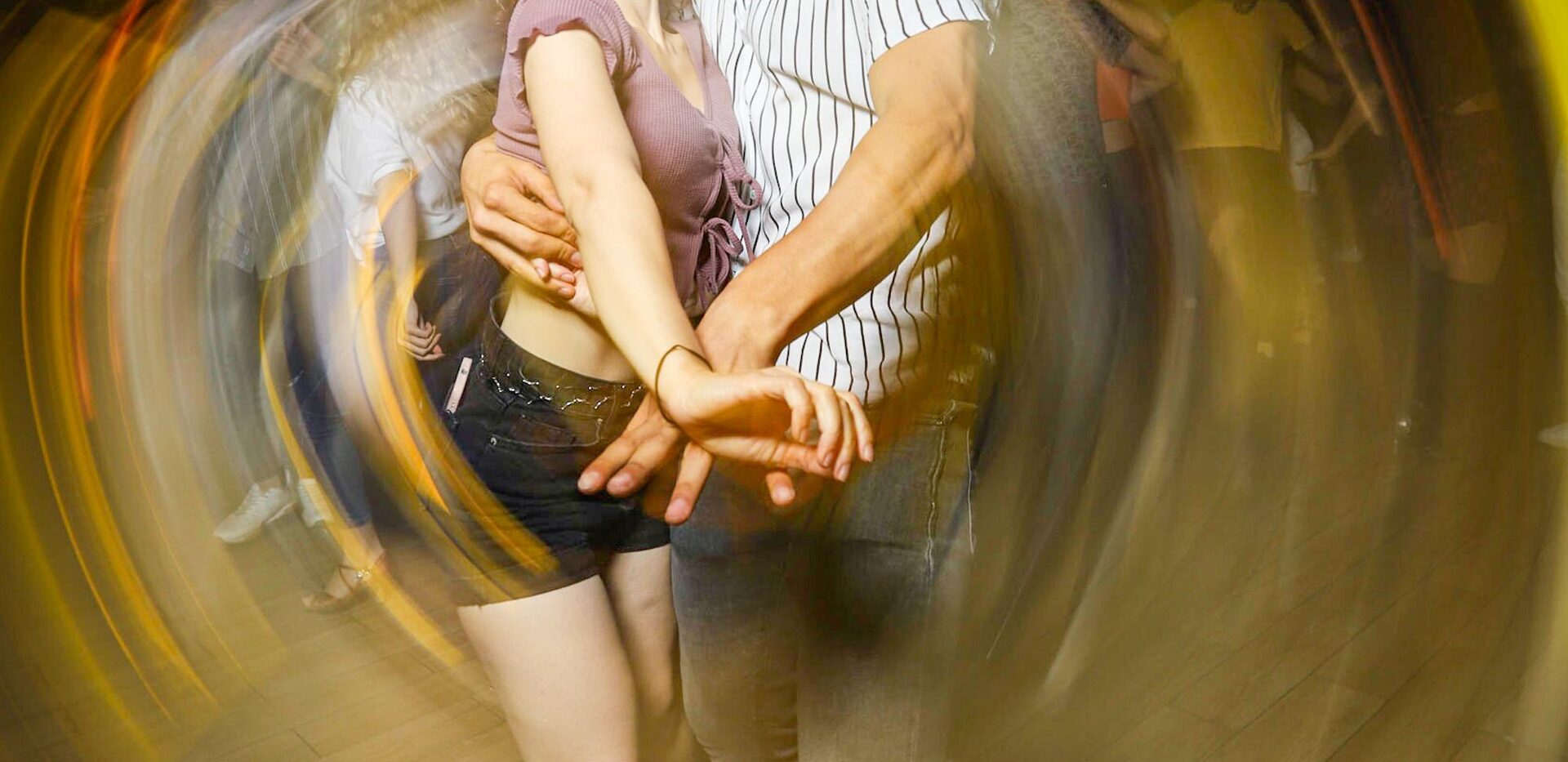
A story we have been dancing for a hundred years
From the streets of Harlem to our halls in Rome: a journey through the music, the dance and the people who made them immortal.
It is 1927, and in Harlem the air is buzzing with something new.
In the clubs along 125th Street, an orchestra is playing a rhythm no one has ever heard before: syncopated, alive, impossible to ignore. On the floor, bodies answer before the mind can catch up. And so, among the smoke and the low lights of the Savoy Ballroom, a dance is born that will become the language of an entire era — and that, a hundred years later, we are still dancing.
01
Savoy Ballroom
The hall that changed dance forever
Opened in 1926 on Lenox Avenue, the Savoy Ballroom was the only venue in Harlem with no segregation on the dance floor: Black and white dancers side by side, at a time when that was anything but a given.
Two orchestras played every night, facing each other, in a running battle that kept the room at full energy. This is where the name Lindy Hop was born — from Charles Lindbergh and his "hop" across the Atlantic.
Chick Webb, Ella Fitzgerald and Frankie Manning all passed through the Savoy: legends who turned a ballroom into a cultural symbol.
02
Lindy Hop
A dialogue of bodies, born out of improvisation
Lindy Hop was born as a fusion: it takes the legwork from Charleston, the breaking apart from the Breakaway, and the rhythmic soul from jazz. But its real invention is connection — a physical dialogue between two people listening to each other in real time.
There is no fixed choreography: every move is born and transformed in the moment, led by live music. It is a dance that reinvents itself with every song, every couple, every night.
Today Lindy Hop lives all over the world, but its grammar is still the one from Harlem: connection, listening, shared joy.
03
Solo Jazz
When the body plays on its own
Even before Lindy Hop, jazz already had its own vocabulary of movement: solo jazz, born in juke joints and vaudeville theatres, where every dancer developed a personal style, as recognisable as a signature.
Charleston, Shim Sham, Suzie Q: steps that today feel like repertoire, but that started out as pure individual expression, with no partner and no written rules — just the body answering the rhythm.
It is the discipline we teach to anyone who wants to find their own voice in movement, before starting a conversation with a partner.
04
Swing music
The glue holding everything we are together
Behind every step, every hall and every story told so far, there is always one thing: swing music. A live orchestra, a 4/4 time that swings without ever breaking, a phrasing that invites movement before words can describe it.
When we teach people to dance, first of all we teach them to listen. Because swing — the real thing — is not a set of steps: it is an answer to the music, and that is why it keeps living, a hundred years later, here in Rome too.
This story continues with Savoy Swing Italy.
Come and dance with us. The roots are the same, the energy is today's.